



3D Printing Service
Materflow’s 3D printing service offers high-quality parts and products for industrial needs quickly and cost-effectively. We offer our industrial customers expertise and smooth cooperation.
3D Printing Service for Industrial Manufacturing
Materflow offers high-quality, cost-effective and sustainable 3D printing service to industrial customers. Our service covers plastic and metal 3D printing, prototypes, series production and 3D scanning.
We customize 3D printing solutions according to the needs of each customer. We always ensure the 3D printed part meets the customer’s needs. We are a Finnish operator: we work in Lahti, from where we deliver 3D printed parts and products to our customers quickly and flexibly. Contact us!

Industry-Focused Expertise: Our experienced team possesses deep knowledge and understanding of various industries, enabling us to provide 3D Printing Service designed specifically for your requirements.
Cost-Effective Solutions: Our 3D Printing Service offers competitive pricing and efficient production methods, allowing you to reduce costs while maintaining high-quality results.
Commitment to Quality and Continuous Improvement: In our 3D Printing Service, we’re dedicated to maintaining high-quality standards and continuously improving our processes and services, always striving to exceed your expectations.
3D Printing Service for Metal Parts
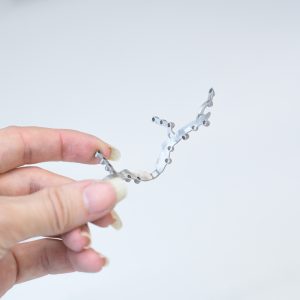
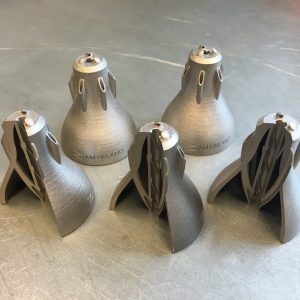
The 3D printing service for metal parts enables a faster production process and the realization of more complex shapes than traditional methods. Metal 3D printing brings the greatest benefits when it is used to replace machined or cast parts.
3D-printed metal parts suit many industrial needs, including harsh environments and demanding conditions.
3D Printing Service for Plastic Parts
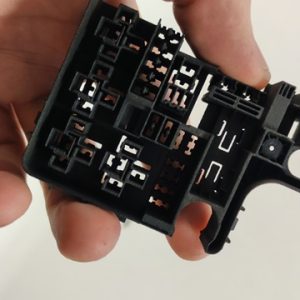
The mechanical and chemical properties of 3D-printed plastic parts with industrial-level production machines are completely comparable to traditional methods. About 85% of all the prints we make are used in the final product.
We have a comprehensive selection of plastic materials from standard PA12 to durable glass-reinforced polyamide and flexible rubber-like TPU.
3D Printing Service for Prototypes
3D-printed prototypes speed up product development. The absence of tooling or molding requirements means that your product can be printed directly from a digital design, allowing for adjustments as needed.
This streamlined process makes prototyping more efficient than conventional methods and enables multiple iterations at once to save time.
Series Production by 3D Printing
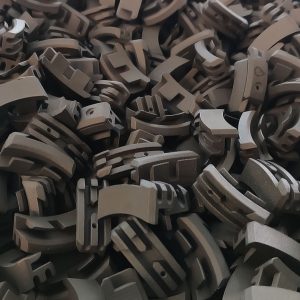
Today, 3D printing technology has developed to the point where we can implement serial production as a 3D printing service cost-effectively. We offer serial production for both metal and plastic prints. The 3D printing service enables easy scaling of production from individual parts to serial production.
Our modern 3D printing service is perfect for mass production, enabling us to produce thousands of pieces for our clients every month. We continuously invest in maintaining our serial production capabilities.
3D Scanning
We offer a specialized 3D scanning service that is ideal for replicating old, hard-to-find, or even worn and broken spare parts. With 3D scanning, it is possible to manufacture spare parts, even if the original piece is worn or damaged.
Our 3D scanning service accelerates the 3D modeling process and enables you to utilize our 3D printing service at its full potential.

Plastic Materials in our 3D Printing Service
PA12 Grey
P12 Grey is a pigmented version of PA2200. It is a grey technical plastic used in the SLS printing technology. The material has been developed to be compatible with the fiber laser of Farsoon Flight machines.
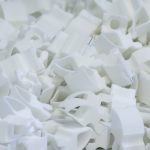
PA2200 (PA12)
PA2200 is a nylon based on polyamide 12. Compared to ordinary polyamide, PA2200 nylon has a higher melting point and crystallization. As a raw material, PA2200 nylon is considered the standard material for 3D prints.
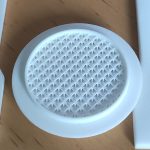
PA3200GF (PA12GF)
Glass-reinforced polyamide. The raw material is polyamide (PA12) mixed with small glass beads. The beads strengthen the resulting parts and increase the stiffness, abrasion resistance, and temperature resistance.
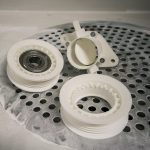
PA2210 FR – UL 94 V-0
PA2210 FR PA12-based nylon containing a halogen-free flame retardant chemical. This fire-classified nylon is roughly equivalent to PA2200 material in its mechanical properties.
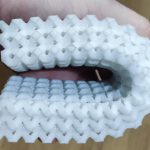
ROLASERIT® TPU
ROLASERIT® TPU is a versatile thermoplastic polyurethane ideal for parts that require flexibility, durability, and shock absorption. Its properties form a bridge between rubbers and plastics.
Metal Materials in our 3D Printing Service
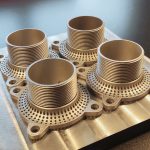
SS15-5 Ph
EOS StainlessSteel PH1 is a pre-alloyed stainless steel in fine powder form. The chemistry of EOS StainlessSteel PH1 conforms to the compositions of DIN 1.4540 and UNS S15500.

Cobalt chrome
Cobalt chrome (Remanium Star) alloy is used in particularly demanding environments in industry and medical applications. The material is commonly used in gas turbines, dental implants and orthopedic implants.
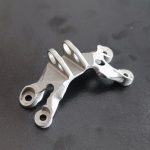
Aluminium AlSi10Mg
Aluminium AlSi10Mg is a traditional metal alloy used in castings with low density and good thermal properties. Due to its density and easy manufacturability, it is one of the cheapest 3D printable metal materials.
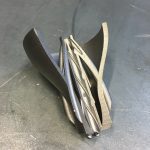
SS 316L
316L Is one of our most popular metal materials. It is suitable for parts in many different industrial application such as medical, automotive, power plants, pulp and paper, chemical and many more.
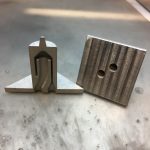
Tool steel
Martensitic tool steel 1,2709 is a very hard and durable steel. Excellent suitability for tools is due to its characteristic hardness, compression strength and wear resistance obtained through annealing.
State-of-the-Art Equipment
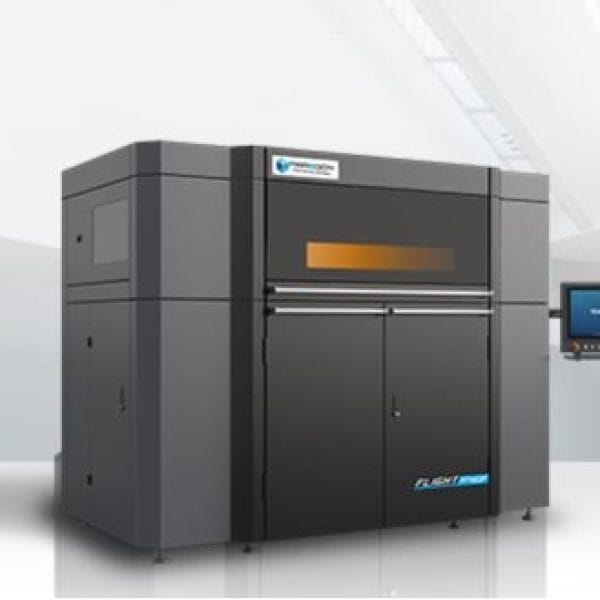
Our commitment to a high quality 3D printing service is backed by cutting-edge equipment from suppliers such as EOS, Farsoon, General Electric, and AMT.
Whether it’s high-performance metal parts or durable plastic components, our advanced equipment empowers us to meet even the most demanding specifications, guaranteeing that your projects are delivered with the highest standards of accuracy.
Post Processing and Quality Assurance
Post Processing for Plastics
- Shot peen blasting systems (manual and automated).
- Vibratory finishing for smoother surface quality. Object max size 300 mm, some geometry limitations.
- Vapor smoothing for ultra smooth parts
- Dyeing systems for colouring.
Post Processing for Metals
- Annealing ovens: for stress relieving, hardening and annealing.
- Machining equipment for post processing according to need: metal lathe, triaxial cutter, band saw.m.
- Finishing equipment: belt sanders, polishing tools, grinding tools etc.
- Vibratory polishing
Quality Control of the 3D Printing Service
- In house laser power measurement.
- Tensile strength measuring (up to 50kN)
- Microscopy.
- 3D-scanning for quality verification.
- MFI measuring for for powder quality control.
- Recording in every printing machine for tracing.
- Wide network for qualifying materials and parts.
Articles


Trusted by














Frequently asked questions about 3D printing services
What if I don't have a ready-made 3D model?
Materflow also offers a design service. We can model a broken part based on measurements or design your idea from scratch into a production-ready 3D model.
Is a 3D printed plastic part durable?
Yes. For example, industrial PA12 nylon is very durable. It is used in mass-produced parts in heavy industry, vehicles and consumer products. When properly designed, it can completely replace an injection molded part.
What are the largest 3D printable part sizes?
The build chambers of our SLS machines allow for the production of pieces measuring approximately 300x300x600 mm in size. With the FDM farm and by joining parts together, we can produce significantly larger units.
How much does 3D printing cost?
The price of 3D printing is mainly affected by:
- Material amount (Volume): How much material is used to produce the part.
- Machine time and height: How long the laser needs to process the part and how tall it is (layer by layer).
- Packing density: How many parts can fit into a single build (especially in SLS technology).
- Post-processing: Plastic parts are blasted clean of powder, while metal parts often require heat treatment and removal of support structures.
How does ordering 3D prints from Materflow work?
The ordering process at Materflow:
- Send your 3D model (STEP or STL).
- Experts review manufacturability (DfAM).
- You receive a quote and a delivery time estimate.
- Production starts in Lahti.
- Quality control and delivery by mail or freight.
For what is industrial 3D printing used?
Industrial 3D printing is no longer just a “prototyping shop”. Here are some examples of how our customers benefit from our services:
Speeding up product development: 3D printing enables “Rapid Prototyping”: a design can be turned into a physical part in 1-3 business days. Test results correspond to reality, which reduces the risk of costly errors in production.
Cost-effective small-scale series production: Injection molding requires an expensive mold, which makes small-batch production unprofitable. 3D printing requires no start-up costs: you only pay for the parts produced.
Production aids and jigs: We manufacture assembly jigs, welding fixtures and guards in days – often lighter and more ergonomic than aluminum counterparts.
Spare parts manufacturing and “Digital Warehousing”: Spare parts are kept as a file and printed as needed. This extends the life cycle of the equipment and reduces downtime.