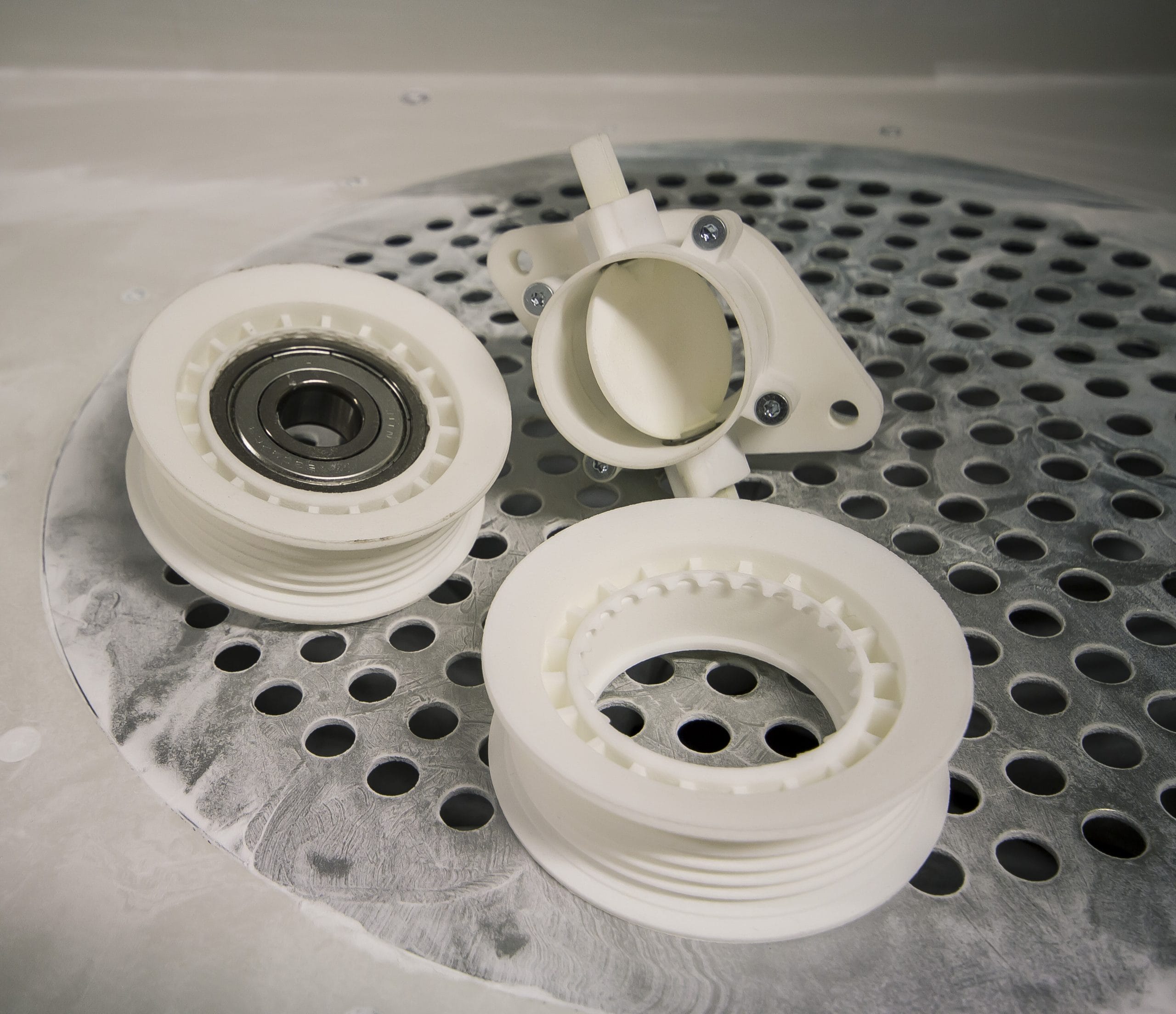





SLS 3D Printing Capacity: Scalable Nordic Manufacturing 2026
The landscape of industrial production has shifted. What was once a tool exclusively for rapid prototyping has matured into a robust solution for end-use component manufacturing. As we look toward 2026, the demand for agility in supply chains and the need for complex, lightweight geometries have positioned Selective Laser Sintering (SLS) as the primary driver for high-quality plastic production. Modern SLS 3D printing services now provide the repeatable precision required for demanding sectors like aviation, medical technology, and heavy industry, bridging the gap between digital design and physical reality.
Moving beyond the limitations of traditional injection molding, industrial 3D printing offers a path to localized, on-demand manufacturing. This transition is not merely about speed; it is about the functional integrity of the parts produced. With advancements in material science and machine stability, engineers can now specify SLS for small-to-medium serial production with the confidence that every part in a batch of thousands meets the same rigorous mechanical standards.
The Transition to Serial Production with SLS Technology
Selective Laser Sintering stands apart from other additive methods due to its unique powder-bed fusion process. Unlike systems that require sacrificial support structures, SLS utilizes the unsintered powder surrounding the part to provide natural support during the build. This technical characteristic translates into a significant industrial advantage: freedom of design. Engineers can create intricate internal channels, interlocking parts, and complex lattices that would be impossible to manufacture through traditional milling or molding.
Because SLS does not need supports, parts can be ”nested” or stacked tightly throughout the entire three-dimensional volume of the build chamber. This maximizes the number of components produced in a single print cycle, significantly lowering the cost per part for serial production. This capability makes industrial 3D printing services a commercially viable alternative to expensive tooling for batches ranging from dozens to thousands of units.
Beyond the geometry, the materials used in SLS—primarily high-performance polyamides like PA12—offer the durability required for functional use. These parts are not fragile models; they are impact-resistant, thermally stable, and chemically resistant components ready for the assembly line. By eliminating the need for physical molds, companies can iterate designs instantly, responding to market feedback or engineering changes without the financial penalty of obsolete tooling.
Nordic Quality Standards in Additive Manufacturing
Reliability in serial production is governed by traceable quality and process control. In the Nordic industrial sector, the focus on precision ensures that additive manufacturing is integrated into the supply chain as a dependable pillar rather than an experimental additive. This involves using professional-grade equipment, such as systems from EOS or Farsoon, which provide the thermal stability necessary for consistent mechanical properties across the entire build plate.
Every batch is monitored to ensure material purity and sintering parameters meet ISO-certified standards.
Industrial SLS systems offer tolerances that rival traditional manufacturing, ensuring parts fit perfectly in complex assemblies.
By choosing a partner focused on industrial-grade output, companies eliminate the risks associated with hobbyist-level equipment. The result is a finished product that is ready for demanding environments, whether it is a lightweight duct for an aircraft or a biocompatible housing for a medical device. This level of quality is what defines the transition from simple printing to professional additive manufacturing.
Design Optimization: Maximizing Functional Performance
The true value of modern additive manufacturing is realized through Design for Additive Manufacturing (DfAM). Unlike traditional subtractive methods where complexity adds cost, SLS technology allows for geometric freedom without financial penalty. This enables engineers to utilize topology optimization—a process where material is placed only where it is structurally necessary. The result is a part that is significantly lighter but maintains the required mechanical strength, a critical factor for industries like aerospace and automotive where every gram saved translates to fuel efficiency and performance.
Beyond weight reduction, SLS allows for the consolidation of multiple components into a single printed part. By eliminating fasteners, seals, and assembly steps, manufacturers reduce potential points of failure and streamline their supply chains. Complex internal channels for cooling or fluid flow can be integrated directly into the structure, achieving performance levels that are physically impossible to replicate with molds or CNC machining.
Sustainability and Supply Chain Resiliency
In 2026, industrial sustainability is no longer an option but a requirement. SLS 3D printing services contribute to a circular economy by drastically reducing material waste. In subtractive manufacturing, up to 80% of a raw block of material may end up as scrap. In contrast, SLS uses only the material needed for the part itself, and the surrounding unsintered powder can be recycled for future builds.
Furthermore, the ability to manufacture parts on-demand enables a shift toward digital warehousing. Instead of maintaining large physical inventories of spare parts—which consume space and tie up capital—companies can store digital files and print components only when they are needed. This localized production model reduces the carbon footprint associated with long-distance shipping and ensures that supply chains remain resilient against global disruptions.
Industrial Post-Processing: Ready for the End-User
A functional industrial part is rarely finished the moment it leaves the build chamber. To meet the aesthetic and technical requirements of the medical or consumer goods sectors, professional post-processing is essential. Modern finishing techniques ensure that SLS parts achieve the desired surface roughness, color, and chemical resistance required for their specific application environment.
Vibratory Finishing
Automated polishing to achieve smooth, tactile surfaces for consumer-facing parts.
Deep Dyeing
Penetrating color treatments that ensure parts remain scratch-resistant and visually consistent.
Technical Coating
Specialized chemical or UV coatings to enhance durability in harsh industrial environments.
The integration of Selective Laser Sintering into industrial manufacturing represents a fundamental change in how we approach production. By combining the freedom of design with the reliability of serial production, companies can now develop superior products faster and more sustainably. As the technology continues to evolve, the focus remains on delivering high-performance, functional parts that meet the rigorous standards of the modern global market.
Optimize Your Serial Production with Materflow
Are you ready to transition from traditional manufacturing to high-quality industrial 3D printing? Our experts help you unlock the full potential of Additive Manufacturing, from initial design optimization to scalable serial production.
Contact Our Experts Today